
Life After Return
Navigating work, Services, and Community in Bosaso
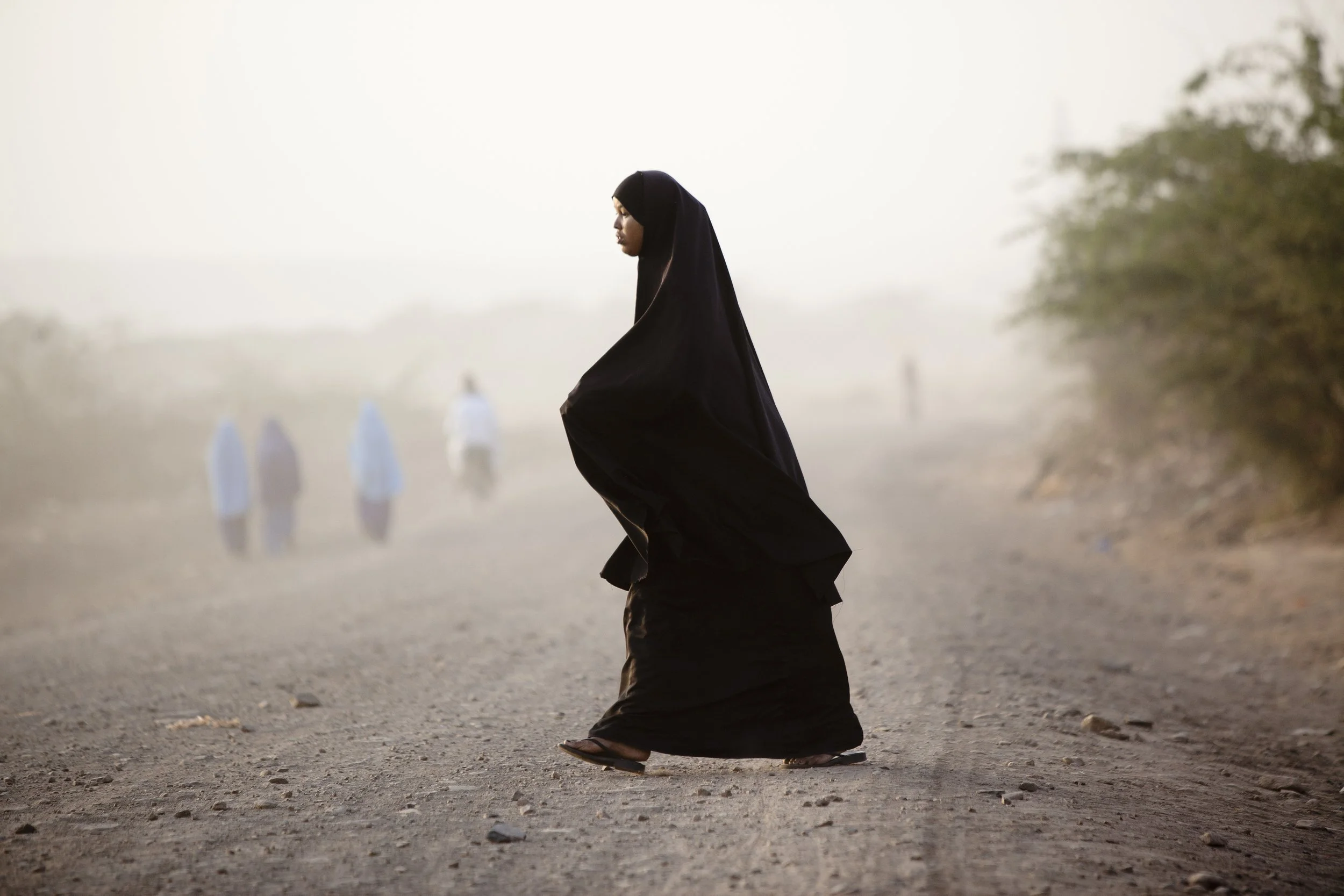
Image for representational purposes only. Photographed by Sean Power
We met Naciimo in Bosaso
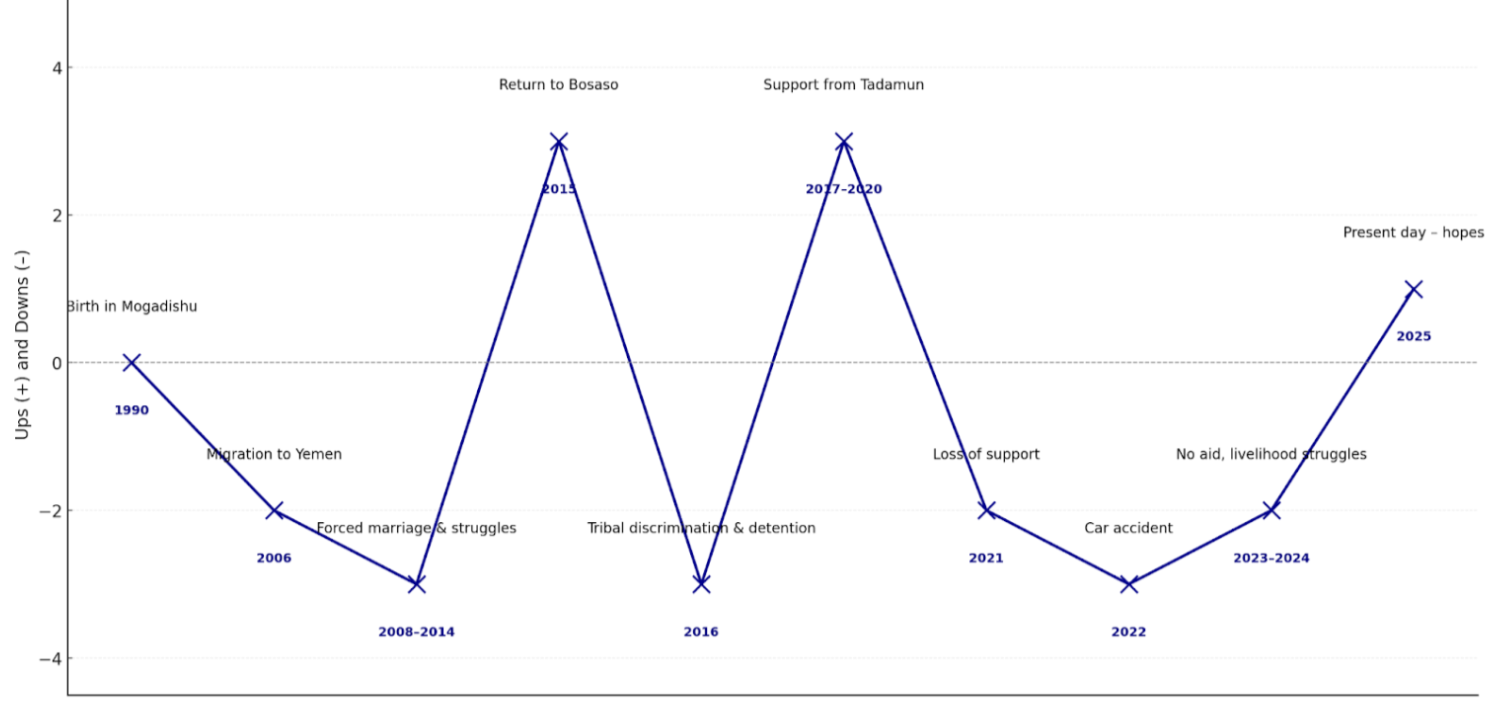
Born in Mogadishu in 1990, she grew up during years marked by violence and economic hardship. She described the conditions that first pushed her to leave: “The streets were filled with dead bodies… that is the reason I left Somalia.” Her family struggled with poverty, and by the time she reached fifteen, she made the decision to leave Mogadishu, travelling north through Bosaso and onward to Yemen.
Like many who leave Somalia, she went seeking safety and work, but life in Yemen quickly became difficult. “When we arrived in that country, everything changed,” she said. The young people who had encouraged her to travel began “engaging in immoral activities,” and her own situation became increasingly constrained after marriage. When she later tried to separate from her husband, she faced threats and pressure.
As the Yemen conflict intensified, she managed to persuade him to allow her to return home with her daughters, and in 2015 she travelled back to Bosaso.
First Steps To Re-establishing Life in Bosaso
“We were welcomed warmly,” she said, recalling those first weeks back. In her early months, she experienced the initial stability that many displaced and returnee households described during fieldwork, when community support and humanitarian assistance overlap. Families received food, a temporary allowance, and a one-time investment to restart their lives. “Every family received 1,000 dollars. I opened a small shop with that money,” she explained. When the business later declined and project support ended, she shifted to domestic work to cover her children’s needs.
Her trajectory echoed wider economic patterns in Bosaso, where newcomers typically enter informal, low-paid work and where limited capital makes it difficult to sustain small enterprises.
Education became one of the most important forms of stability for her children in those initial months. “Tadamun used to pay for the transportation of the children… they supported us with school and food,” she said. But this support, like many services in Bosaso, was tied to short-term projects. When it ended, she could no longer afford schooling.
Our research in Bosaso shows that only 40% of displaced families can access education, often due to cost and distance, with refugees facing even greater barriers than IDPs. Without regular support, her children’s schooling was one of the first things to fall away.
Setbacks and Strains: Discrimination, Safety Concerns, and a Turning Point
In 2016, she experienced an incident that she still remembers clearly. A dispute with a local girl escalated when, as she explained, “she called soldiers on me and I was illegally arrested.” Naciimo spent four days in detention, a period she described as feeling much longer. “I felt humiliated and discriminated against… I was shocked to hear that I was being mistreated because of my tribe.” The experience affected her deeply — a challenge also reported by other displaced households in Bosaso, where around 30% of IDPs and 17% of refugees have faced discrimination, particularly minority Somali groups and Ethiopian refugees.
Although security is generally perceived as high in the city (77–88%), our findings show that women and girls often face harassment risks in certain public areas, which restricts their movement. Psychosocial pressures are also common: 42% of displaced individuals report feeling sad and 27% stressed, with refugees recording the lowest levels of life satisfaction despite similar employment conditions. These factors shaped the environment Naciimo navigated during her first years back in the city.
W Model of Life and Reintegration journey - Naciimo
Naciimo’s reintegration took another sharp downturn in 2022. That year, she was involved in a car accident in Bosaso that left her with a broken hip. “I broke my hip… that prevented me from working anymore,” she said. Until then, she had managed to sustain her household through a combination of her shop, domestic work, and the support she received in her early months. After the accident, she lost her ability to earn an income entirely. With no savings and no steady assistance to fall back on, she began relying on food cards provided by WFP to feed her children. The loss of work also meant she could no longer afford school fees or any of the basic services she once accessed
With paid work no longer possible and basic services now out of reach, she depends heavily on the people around her. Despite earlier experiences of discrimination, she spoke of neighbours who step in with small amounts of money, food, or practical help when she needs it. Their presence, she said, makes her feel included: the kindness she receives has helped her feel “a part of this community,” even as her economic situation remains difficult.
Excluded from Decisions, Clear on Priorities
Although neighbours have been her main source of support, Naciimo has had little opportunity to participate in the decisions that shape services in Bosaso. She told us that she has never been invited to local meetings or consultations, explaining simply, “I don’t go to places where decisions are made.” In many cases, it is the IDP committee that attends such gatherings, not individuals like her. This aligns with LLEARN data showing that less than one-third of displaced people take part in community meetings, and that many rely on elders, committees, or religious leaders to convey their concerns. Yet participation matters deeply to her; she added that she would like to be involved if given the chance, a reminder that women’s voices — especially those who have faced displacement and remain largely absent from formal planning spaces in the city.
When asked what would make the biggest difference in her life today, Naciimo’s priorities were grounded in her daily reality. She emphasised the need for schooling above all else. She also pointed to the wider set of basic services her family relies on: “The most important services we need include education, economic investment, health, water, security, and sanitation.” Access to these, she said, would allow her to regain stability and independence: “Our livelihood will improve, and we can make changes.” Alongside this, she expressed a strong interest in being part of discussions that shape services and support in the city, noting, “I personally would like to participate in those meetings.”
During the co-creation workshops, local actors identified a practical set of priorities to strengthen reintegration in Bosaso. These included expanding WASH facilities in IDP settlements, improving education access through fee waivers and reopening free schools, and linking vocational training to start-up grants or guarantee-backed microfinance for small businesses. Participants also highlighted the need for stronger GBV and psychosocial services, better political inclusion of displaced leaders, and upgraded shelter and site infrastructure to reduce evictions.
These collective priorities echo the gaps that shaped Naciimo’s journey and point to the kinds of changes that would matter most for people in her position moving forward.
This story is based on a conversation with Naciimo. It reflects her lived experience, edited for clarity, and highlights the integration themes central to LLEARN’s work.
The Local Leadership in East Africa on (Re)integration Network (LLEARN) uses such lived experiences to generate community-driven evidence, build participatory forums and coalitions to local actors to build sustainable systems for all. Learn more about LLEARN here.