

Our Reports & Papers
Local Leadership Series: Sustainable (Re-)Integration
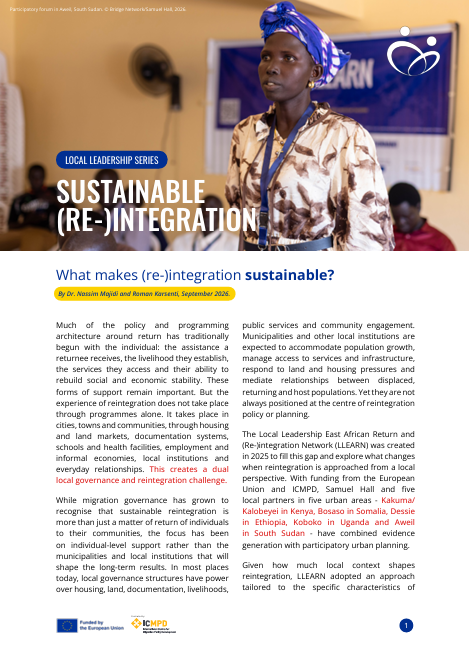
What makes (re-)integration sustainable? This LLEARN paper argues it's not just an individual process but a local governance challenge; one shaped by the institutions, services and systems that returnees, IDPs and refugees rely on every day. Drawing on Participatory Urban Forums across five East African cities, it explores what changes when reintegration is approached from a local perspective.
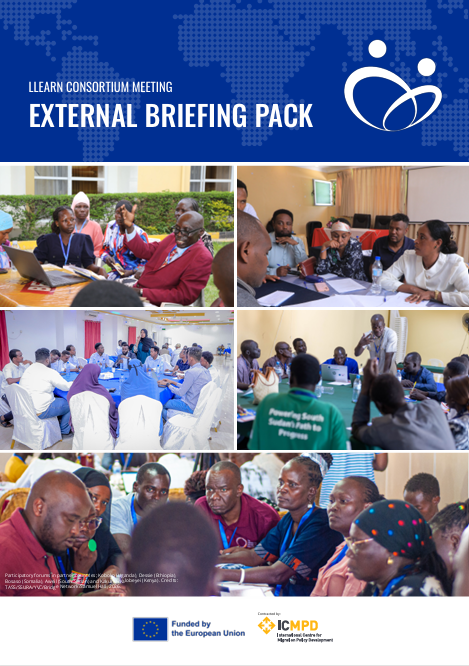
LLEARN External Briefing Pack: From City Priorities to Pathways
This briefing pack introduces LLEARN's transition from participatory planning to implementation across five secondary cities in East Africa. It presents the five city-specific pilot models co-designed through Participatory Forums, alongside ten additional concepts ready for partnership and investment. Designed for governments, donors, humanitarian and development actors, the briefing outlines opportunities to support locally led solutions, strengthen implementation, and scale approaches that promote more inclusive and sustainable (re)integration.
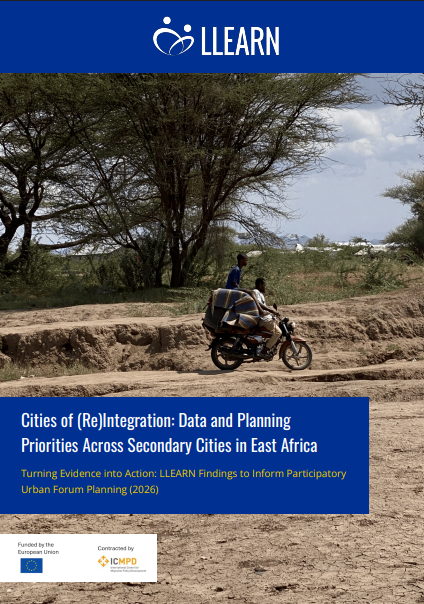
LLEARN Phase 1 Report: Cities of (Re)Integration: Data and Planning Priorities Across Secondary Cities in East Africa
Drawing on research across five secondary cities in Kenya, Uganda, Somalia, Ethiopia and South Sudan, this report examines how displacement, migration and (re)integration shape urban life. It identifies ten cross-cutting findings and city-specific priorities, highlighting the role of local governance, service delivery, housing, livelihoods and social inclusion. The report provides an evidence base for LLEARN's Participatory Urban Forums, supporting local stakeholders to turn research into practical, locally led planning and action.
The LLEARN Conceptual Desk Review lays the foundation for understanding reintegration through a locally led lens. It maps key themes — from governance and livelihoods to gender, social cohesion, and urban systems — across five East African countries, framing how evidence and community insights can inform inclusive, locally driven reintegration pathways.
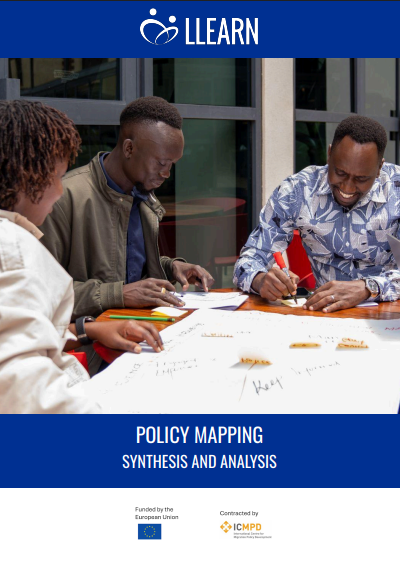
Policy Mapping: Synthesis and Analysis
This policy analysis reviews the legal and policy frameworks shaping (re)integration across Kenya, Uganda, Somalia, Ethiopia and South Sudan. It explores how global, regional and national commitments are translated into practice, identifies gaps in implementation and coordination, and highlights practical entry points for strengthening inclusive urban governance. Designed to inform LLEARN's Participatory Forums, the report connects policy with locally led action to support more coherent and sustainable (re)integration.