
Reintegrating in a City of Possibility: Youth Aspirations in Koboko
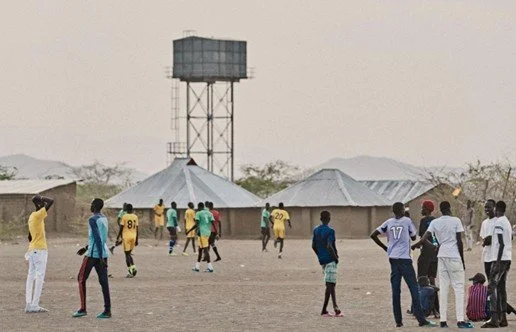
Image for representational purposes only | Photographed by René Habermacher
Koboko is one of the few towns in Uganda where refugee inclusion is led by the municipality itself. It was the first to receive direct EU funding for displacement-focused urban development, and today its schools, clinics, markets, and neighbourhoods are shared almost seamlessly by hosts, refugees, and returnees. With trust in local government at 75% across both groups and community participation higher than in most border towns, Koboko offers a practical example of how city-led coordination can support reintegration in fast-growing urban settings.
[Listen to our podcast on the Koboko model here]
Amid this growing, crowded, hopeful town, we met a young man from Yei, James (name-changed) who arrived in Koboko in 2015, whose life captures what reintegration and belonging look like in Koboko.
The Long Road to Inclusion
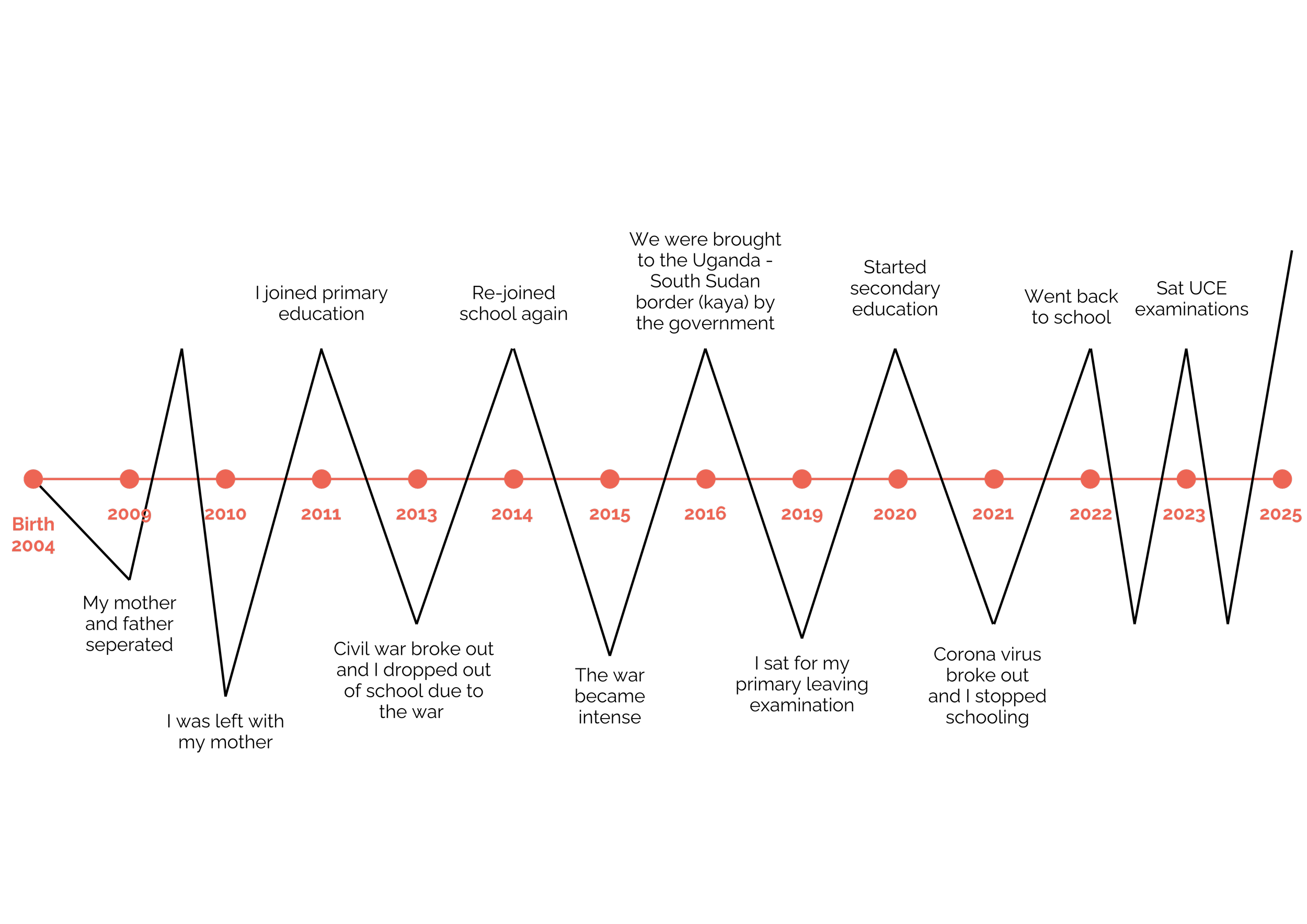
James was born in 2003 in Yei, South Sudan, where conflict and family separation defined much of his early life. When fighting escalated in 2013 and again in 2016, he moved between relatives and was repeatedly forced out of school before finally fleeing to Uganda. During the journey, rebel roadblocks turned them back twice, transport costs soared, the vehicle got stuck in mud near Kimba, and by the time they reached Kaya, James recalls that there was ‘only the relief of arriving alive.’ He was taken to Bidibidi settlement before later joining his relatives in Koboko, drawn by the chance for better schooling, safer movement, and more reliable health services.
For James, arrival in Koboko meant something he had not felt in years: ease of movement, freedom, and a sense of stability. In this town,, our research shows that 85% of hosts and refugees feel safe, and community events, churches, and public spaces remain open and accessible to all.
In Koboko, James immediately noticed how different life felt compared to the camps — “the services are very easy to access,” he said, remembering how nurses in the settlements had been “very harsh” and care slow to reach. Yet settling into the city has not been without strain. Like many displaced young people, he carries the weight of financial pressure and uncertainty, part of a wider pattern in which 58% of refugees report sadness or stress linked to income insecurity and uneven access to services. School is where these pressures show most clearly. Koboko’s enrolment figures mirror his experience: while 73% of host children attend school, only 61% of displaced learners do, largely because of fees and overcrowding. “They sent me home because of the fees. “You stay at home, you look for money, and you begin forgetting you are in school,” he says.
What he wants most now is stability through education, work, and medication — services he associates with dignity and a future. “Education is all about money,” he said. “If you’re not educated, you don’t get that opportunity to have a good life… you just meander around.”
For James, making ends meet in Koboko means piecing together whatever work he can find such as carrying bricks on building sites for 7,000 shillings a day, (USD 1.93) or selling small quantities of petrol when construction jobs are scarce. But these jobs do not provide stability. “Seven thousand per day can’t feed a home,” he adds. His side-business in petrol is undermined by debt and unpredictable customers: “People take and don’t pay you… you go today, they tell you come tomorrow.” These pressures mirror wider patterns in Koboko, where only 32% of refugees earn an income, most in informal, low-margin activities, and one-third of all households are in debt, often for school or health costs. Yet despite the strain, James has never considered moving again because, as he put it, “I don’t have any other person there,” and leaving without support “is not possible on my own budget.”
In Koboko, wants to be involved, to contribute, and to learn how city systems work. He asks for better access to education support, employment pathways, and clearer channels to communicate needs.
Trust, Participation, and the Path to Reintegration
For James, support in Koboko has come from a mix of city actors, but not always in the ways he expected. He speaks with appreciation about the UN — “they give clothes, sandals, smearing oil…they provide all the basic needs” — but it is the Local Council who has helped him most directly, calling households when distributions such as mosquito nets arrive and settling disputes within the neighbourhood.
Infact, Koboko stands out because more people here feel represented by their local government than in most border towns — 75% of residents say they trust the municipality, and participation levels, while uneven, are higher than elsewhere.
James’s main space for participation is a small youth savings group where members pool money and plan how to use it during festivals. Beyond this circle, he has not yet been asked to share his views with organisations or authorities. Yet he wants to be involved, and he links participation directly to possibility
Koboko’s city leadership and relative openness gives him hope: he sees a city where joining decision-making spaces is within reach, and he wants to step into them — “If possible, I would like to do more.”
This is precisely where Participatory Forums can strengthen reintegration. In LLEARN, these forums bring together the municipality, refugee-led groups, youth, host communities, and service providers to jointly identify priorities and shape solutions. For young people like James, whose future hinges on education, safety, and fair access to services — the forums create the structured, consistent, city-level space he has never had: a space where his needs can be heard, his ideas can shape programming, and his experience can inform a model of reintegration that Koboko is uniquely positioned to lead.
This story is based on a conversation with James. It reflects his lived experience, edited for clarity, and highlights the integration themes central to LLEARN’s work.
The Local Leadership in East Africa on (Re)integration Network (LLEARN) uses such lived experiences to generate community-driven evidence, build participatory forums and coalitions to local actors to build sustainable systems for all. Learn more about LLEARN here.