
Voices from the Forums: Kakuma’s transition to a municipality - aligning systems with ambition
What does it actually mean for Kakuma to become a municipality?
In Kakuma and Kalobeyei in north-western Kenya, this question sits at the centre of an ongoing transition. Together, the two settlements host more than 306,000 refugees, alongside host communities and pastoralist populations in Turkana County.
For decades, Kakuma functioned primarily through a camp-based humanitarian system. This began to shift with the introduction of Kenya’s Refugee Act 2021, which provides a legal framework for including refugees within national systems such as education, health, and local governance.
Under the SHIRIKA Plan, the Government of Kenya is now taking this a step further. The plan sets out a multi-year approach to move from camp-based assistance toward integrated settlements, where refugees and host communities are part of shared systems and local economies.
The direction is clear. The focus is on inclusion, local governance, and longer-term planning. Yet the transition raises an important question. How does a place governed as a refugee camp begin to function as a municipality?
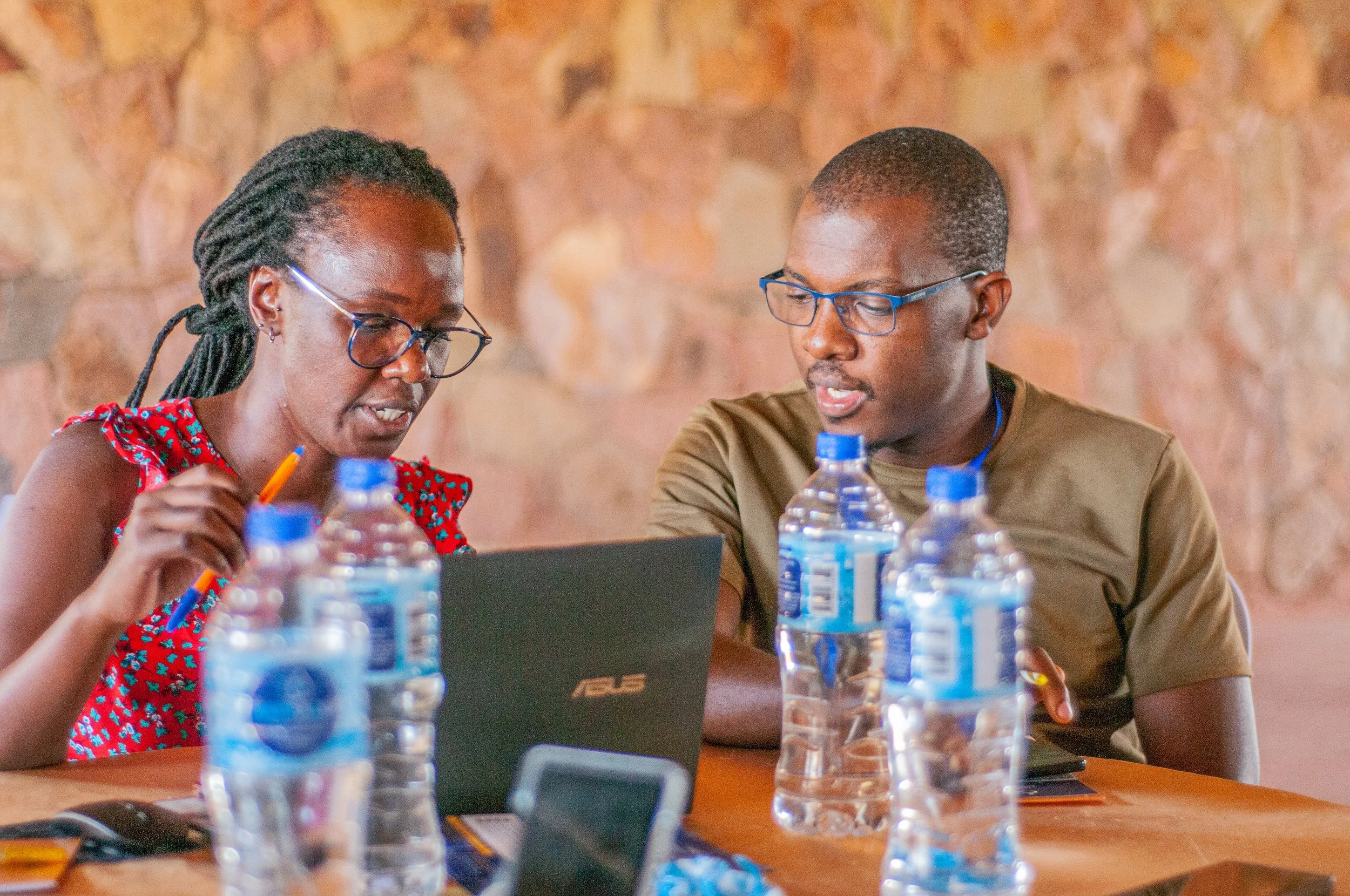
Over the course of three Participatory Forums (PFs) convened by our partner Youth Voices Community under the LLEARN project, government representatives, refugee and host community leaders, county and municipal officials, the Department of Refugee Services (DRS), civil society organisations, humanitarian actors, service providers and refugee-led organisations came together to shape a shared vision for Kakuma's transition. PF1 explored what municipal inclusion should mean in practice, PF2 translated those ambitions into practical solutions across education, mobility and basic services, and PF3 refined these into three community-led project pathways before identifying the Multilingual Service Access and Accountability Model as LLEARN's implementation priority. Across the discussions, one message remained constant: municipal transition will only become meaningful when refugees and host communities can understand, access and influence the systems that govern their daily lives.
A transition underway, but not always visible
For refugees living in Kakuma, the idea of becoming part of a municipality remains difficult to translate into experience. Early in the discussion, a refugee participant captured this uncertainty: “We hear about the SHIRIKA Plan and Kakuma municipality, but what are they really?”
While policies promote self-reliance and economic participation, many refugees described how life continues to be shaped by camp-based systems — particularly around documentation, movement and access to opportunities. As another refugee participant put it, “The people of Kakuma need to feel that Kakuma has become a municipality.”
For municipal and county officials, the challenge is not the absence of policy, but how different systems interact. Several described working within overlapping frameworks that do not always align in practice. One official reflected on this gap, noting the need to “make the policies speak in one language,” pointing to the disconnect between national ambitions and how systems function on the ground.
Education and livelihoods remain central, but not yet aligned
For both refugee and host community members, there was a sense that education is central to what a municipality should provide and enable, particularly as a pathway to self-reliance. However, the conditions needed to support this are still catching up. As one participant explained, “School fees are not affordable for many families, both refugee and host. Both learners and teachers are often not in the right psychological space for learning.” Host community members raised questions about access, pressure on services, and how resources are distributed.
Opportunities to learn are also expanding, but the link to employment is not always clear. “Why am I learning this? Where will I use it?” one youth refugee participant asked.
By the second forum, participants had shifted the conversation away from education alone towards the transition between learning and work. They argued that the challenge was not simply increasing access to schools or training, but connecting education to labour market demand through career guidance, mentorship, bursaries, girls' re-entry pathways, skills recognition and stronger links between training providers, employers and local markets
Some refugees spoke about starting businesses or farming, showing a willingness to engage in the local economy. However, there is a surge of entrepreneurship that has not been matched by the community's purchasing power. As one participant asked, “When everyone opens a business, who buys?”
The building blocks are in place, but stronger links between education, livelihoods, and local markets will be key to making the municipality model work in practice.
Mobility and participation shape access to opportunity
Mobility was raised most strongly by refugee participants, and sits at the centre of what a functioning municipality would need to enable. Even where people gain skills or try to pursue work, practical barriers often stand in the way. Refugees described delays in obtaining identification documents, restrictions on movement, and everyday obstacles such as roadblocks and informal payments. “When you are told you can move across the country, it gives you hope… but the barriers are many,” one participant explained.
At the same time, questions around participation came up across the forum. Refugees, in particular, asked how they can engage more meaningfully in decision-making processes. “Is there a structured way, clear channels, that refugees can participate in decision making?” one participant asked.
By PF2, discussions had broadened beyond movement itself to include access to information. Participants described documentation, permits, digital services and public information as enabling infrastructure for municipal inclusion. The challenge was often not that services did not exist, but that people did not know where to go, what documents were required or how to navigate different institutions.
As one working group participant observed: "The information is lacking. People are not aware…. We can go to the radio. We can give that information so that every resident of Kakuma can hear that in different languages."
From priorities to project pathways
Building on the priorities identified during the first two forums, participants refined three interconnected project pathways, recognising that each addressed a different part of the same transition.
The three concepts included:
The Kakuma Youth Education, Career and Employability Hub, designed to strengthen the transition from education and skills development into employment through career guidance, mentorship, bursary coordination and stronger links with employers.
The Kakuma/Kalobeyei Multilingual Service Access and Accountability Model, combining multilingual information campaigns, community listening groups, service navigation, and coordinated helpdesk events to improve access to documentation, permits and public services.
The Makao Bora Initiative, a community-led spatial planning and service delivery pilot in Kakuma 3, focused on housing, land use, WASH, neighbourhood planning and making municipal development visible to residents.
Following the forum, the consortium reviewed the three concepts against implementation feasibility, institutional ownership, available resources and alignment with the SHIRIKA Plan. The Multilingual Service Access and Accountability Model emerged as the priority intervention for LLEARN's implementation phase because it directly addresses one of the barriers raised consistently across all three forums: helping refugees and host communities understand, access and trust the systems that shape everyday life.
Ultimately, the forums demonstrated that becoming a municipality is not only a legal or administrative transition. It is experienced through everyday interactions with schools, public services, documentation systems, infrastructure and local government.
Watch interviews and videos from the forum here.