
Voices from the Forums: Bosaso welcomes people, but can it help them stay?
Bosaso, Puntland’s main commercial port, has long been defined by movement. People come here to trade, work, escape conflict, rebuild their lives, or continue onward across the Horn of Africa and toward the Gulf. According to IOM Displacement Tracking Matrix (DTM) reports from early 2026 recently Bosaso welcomed almost 7,154 migrants from Ethiopia, 3,981 of them intended to move to Saudi Arabia.
Over time, this has made Bosaso one of Somalia’s key cities of arrival, where mobility is closely tied to commerce, opportunity and for many, survival.
As more people arrive and the city grows, pressure on land and housing has increased. Informal settlements have expanded, demand for water and basic services has risen, and existing environmental risks such as flooding and water scarcity have become harder to manage.
This means integration in Bosaso is not only about being accepted or welcomed after return or displacement. It also depends on whether a fast-growing city can be managed through stronger urban planning, land governance, service delivery and economic inclusion so that people can secure housing, access services and build stable lives over time.
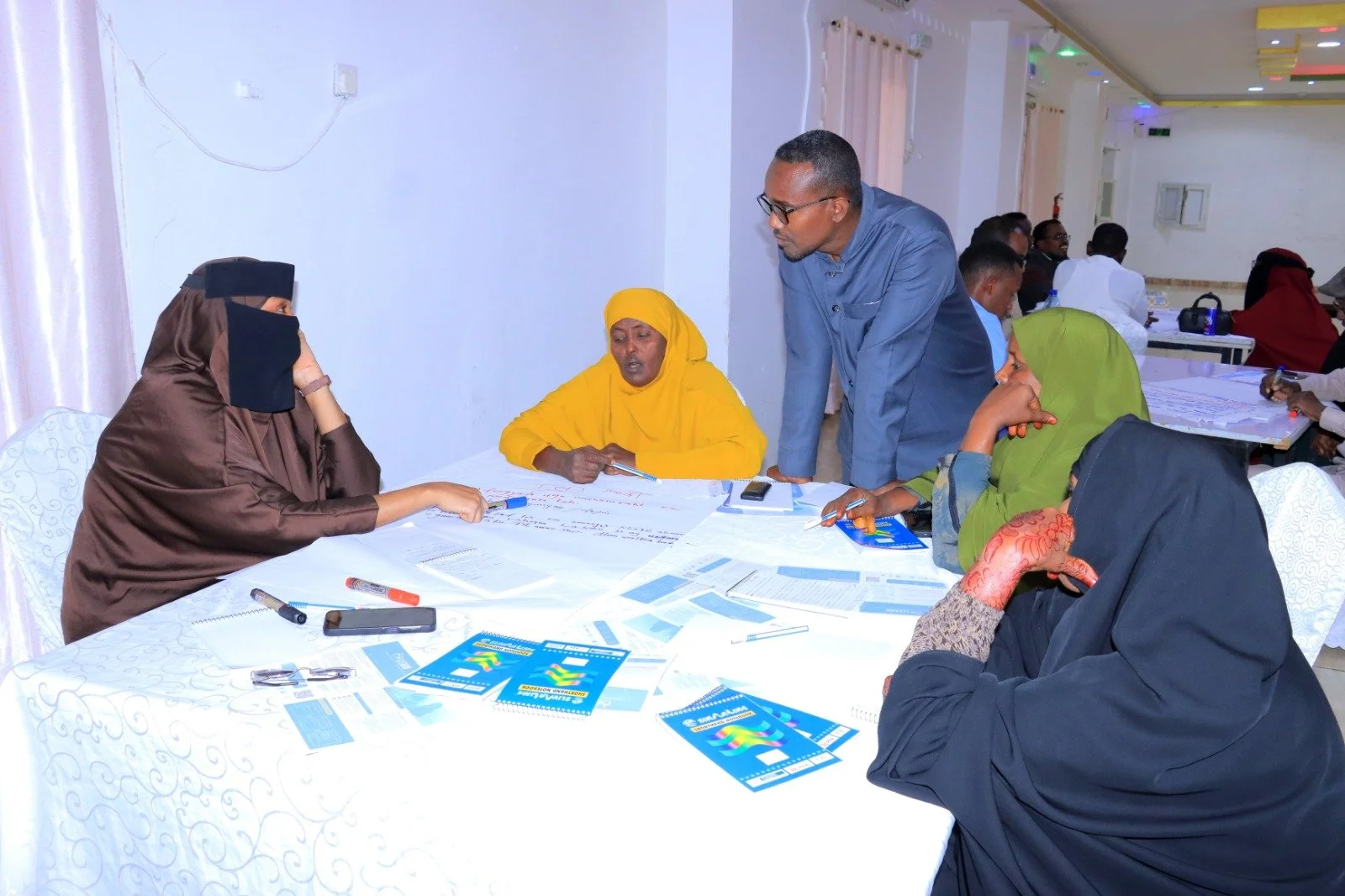
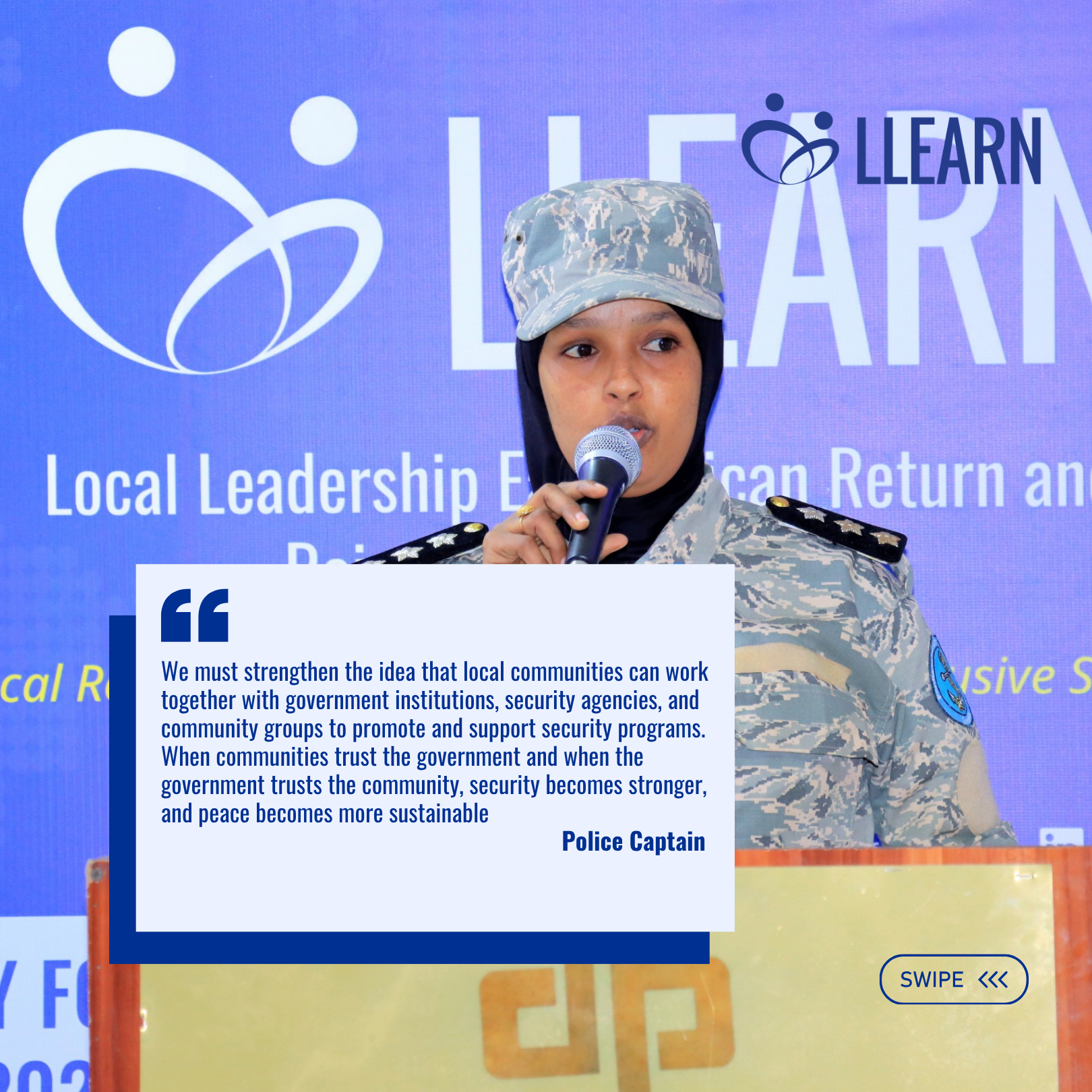
Over the course of three Participatory Forums (PFs) organised by TASS, under the LLEARN project, local authorities, community police, private sector actors, financial institutions, religious leaders, women's representatives, humanitarian organisations, displaced communities and returnees came together to shape a shared vision for reintegration in Bosaso. PF1 explored the city's key reintegration challenges, PF2 developed practical, locally owned solutions, and PF3 translated those ideas into concrete project pathways for implementation. Across the discussions, one message emerged consistently: Bosaso already has many of the ingredients needed for durable reintegration, but lasting progress will depend on how these different actors work together to strengthen the city's systems.
A Welcome creates entry, but land and shelter create stability
Participants repeatedly described Bosaso as a place that receives people. The Director General of the Ministry of Interior referred to it as “the mother who receives everybody,” reflecting the city’s long-standing role as a point of arrival and opportunity.
For some, that openness has translated into belonging over time. A female community representative reflected on her own experience: “I came with nothing, and I was welcomed. Today, I am a property owner.”
Her words highlight an important distinction. Acceptance may help people enter the city, but property ownership reflects something more lasting: security, permanence, and the ability to build for the future.
At the same time, the forum made clear that this pathway is not available to everyone.
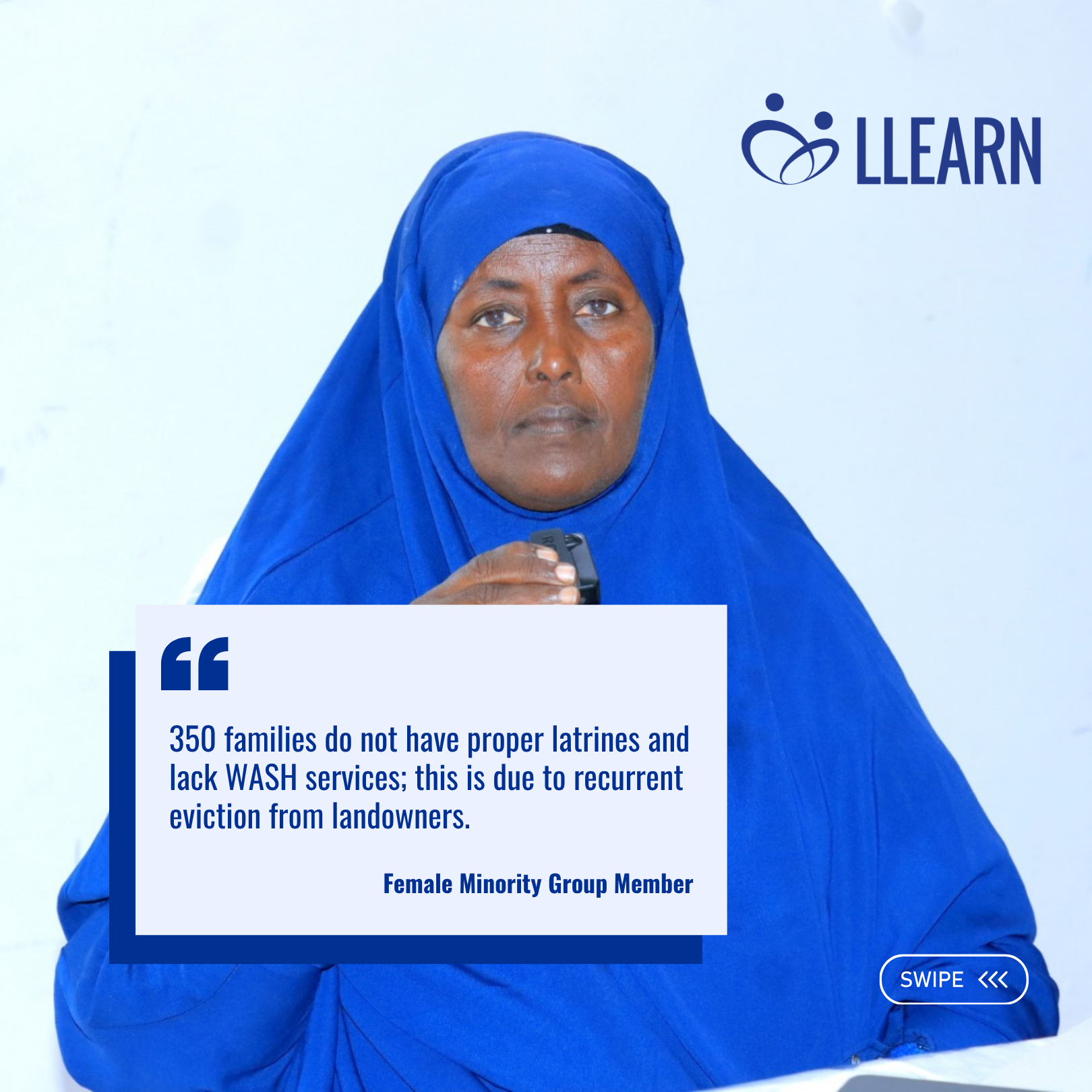
Internally displaced women still living in settlement areas described carton shelters, overcrowded spaces, and broken sanitation systems. One participant explained that “350 families live without a toilet in their homes,” pointing to how far some communities remain from the stability others have been able to reach.
Another participant captured why housing emerged as such a central issue: “The home is the cornerstone of life. When you possess land you make a house.”
This is where policy becomes important.
The Urban Land Management Law helps clarify land administration and gives districts a stronger role in spatial planning, creating a pathway to integrate long-established settlements into more orderly and serviced urban areas.
Building on this, the Bosaso City Strategy links reintegration to the city’s wider development, including port expansion, coastal growth, and efforts to formalise a largely undocumented land market, while prioritising settlement upgrading, stronger tenure arrangements, and managed relocations in strategically important areas.
Across the second and third forums, participants broadened this discussion beyond shelter alone. Land came to be understood not simply as somewhere to build a house, but as the foundation for sanitation, livelihoods, access to finance and long-term belonging. Participants also explored practical ways of expanding access to land through partnerships between municipalities, businesses, religious institutions and local communities, including the use of zakat and waqf financing to support vulnerable households.
The wider question for Bosaso is therefore whether these frameworks can translate into visible change for households still living with insecure shelter and limited services. This matters not only for living conditions, but for livelihoods: where housing is insecure, it is harder for families to save, invest and build stable sources of income.
Work exists, but without stability it is hard to build livelihoods
Many displaced people and migrants are already working, particularly in the informal economy. The challenge raised in discussions was less about willingness to work, and more about whether that work can lead to greater stability over time.
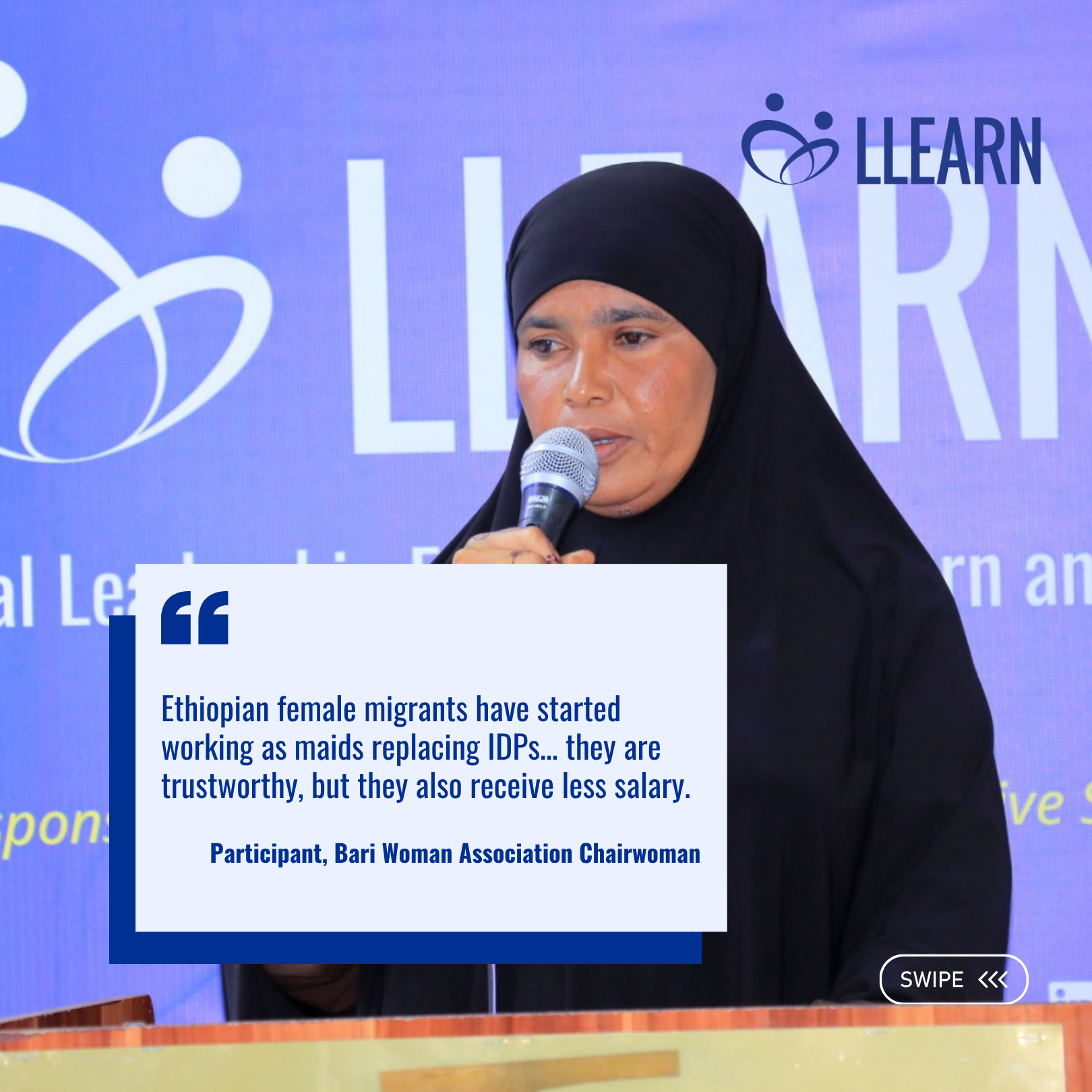
One participant from an IDP women’s association pointed to changing labour dynamics: “Ethiopian female migrants have started working as maids replacing IDPs… they are trustworthy, but they also receive less salary.”
Her comment reflects a labour market where some groups are concentrated in lower-paid and less secure jobs, often with limited protections or bargaining power. Work may be available, but not always on fair or sustainable terms.
Participants also pointed to the close connection between housing and income. Where families face insecure shelter, overcrowding, or the constant risk of relocation, it becomes harder to save money, invest in small businesses, or absorb sudden financial shocks.
In practice, many households rely on informal systems to cope. Elders mediate disputes, religious leaders mobilise support, and private networks help people access loans or employment.
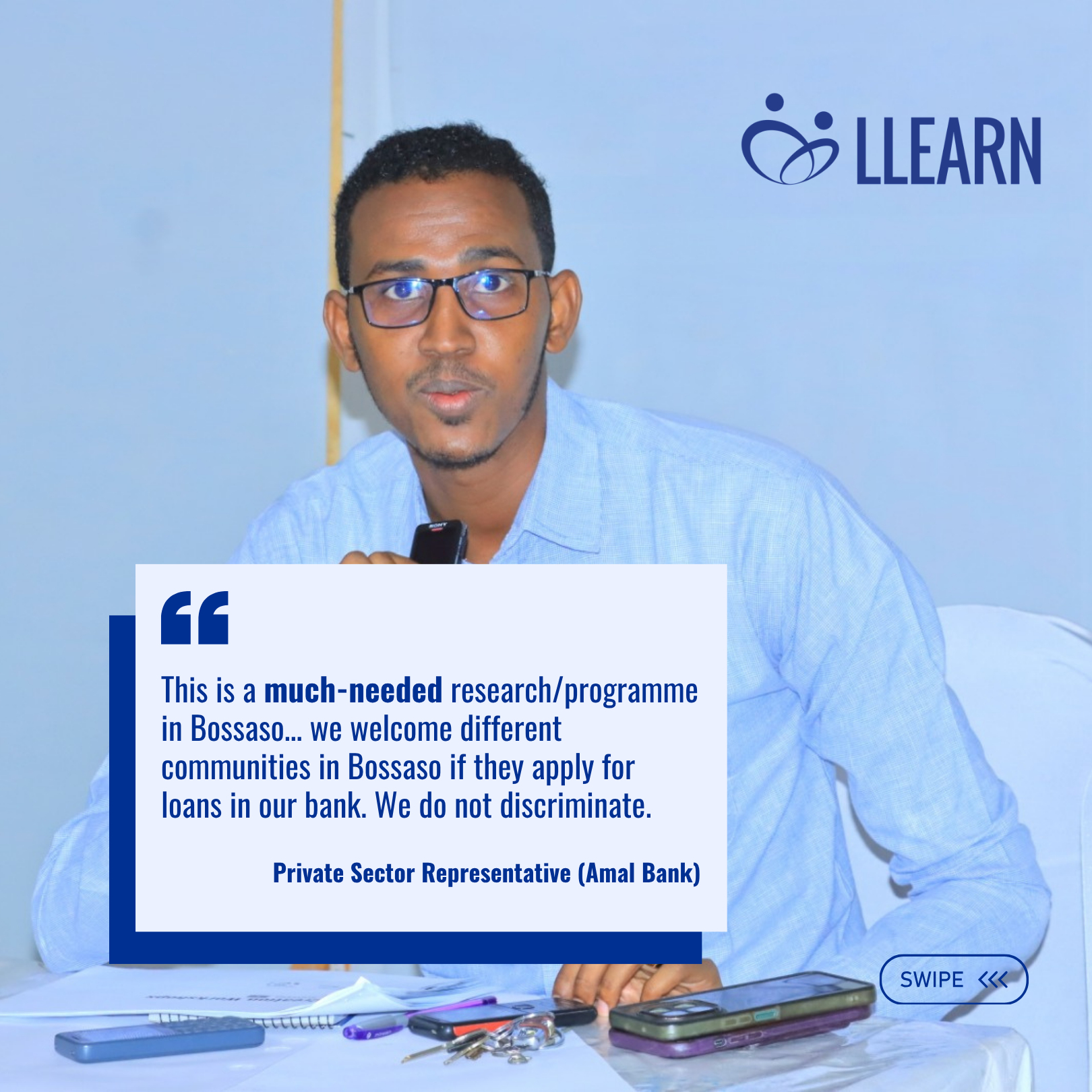
As one private sector representative explained, “When a person faces a business problem, if they are well integrated, the community will stand with them.”
Participants also recognised that Bosaso already has important local financing mechanisms—from businesses and banks to diaspora investment, zakat, waqf and traditional savings systems—that could play a much greater role in supporting reintegration. Instead of relying solely on external humanitarian funding, these locally rooted systems were seen as an opportunity to strengthen both livelihoods and social cohesion over the longer term.
Reintegration in Bosaso depends on how growth is governed
This sense of instability is reflected in how people think about the future. Bosaso’s role as a migration hub continues to shape how people think about the future. A speaker described how families spend large sums to send relatives abroad, drawing money out of the local economy.For these households, Bosaso is not only a place of settlement, but also part of a longer journey, where leaving remains a possibility or a goal.
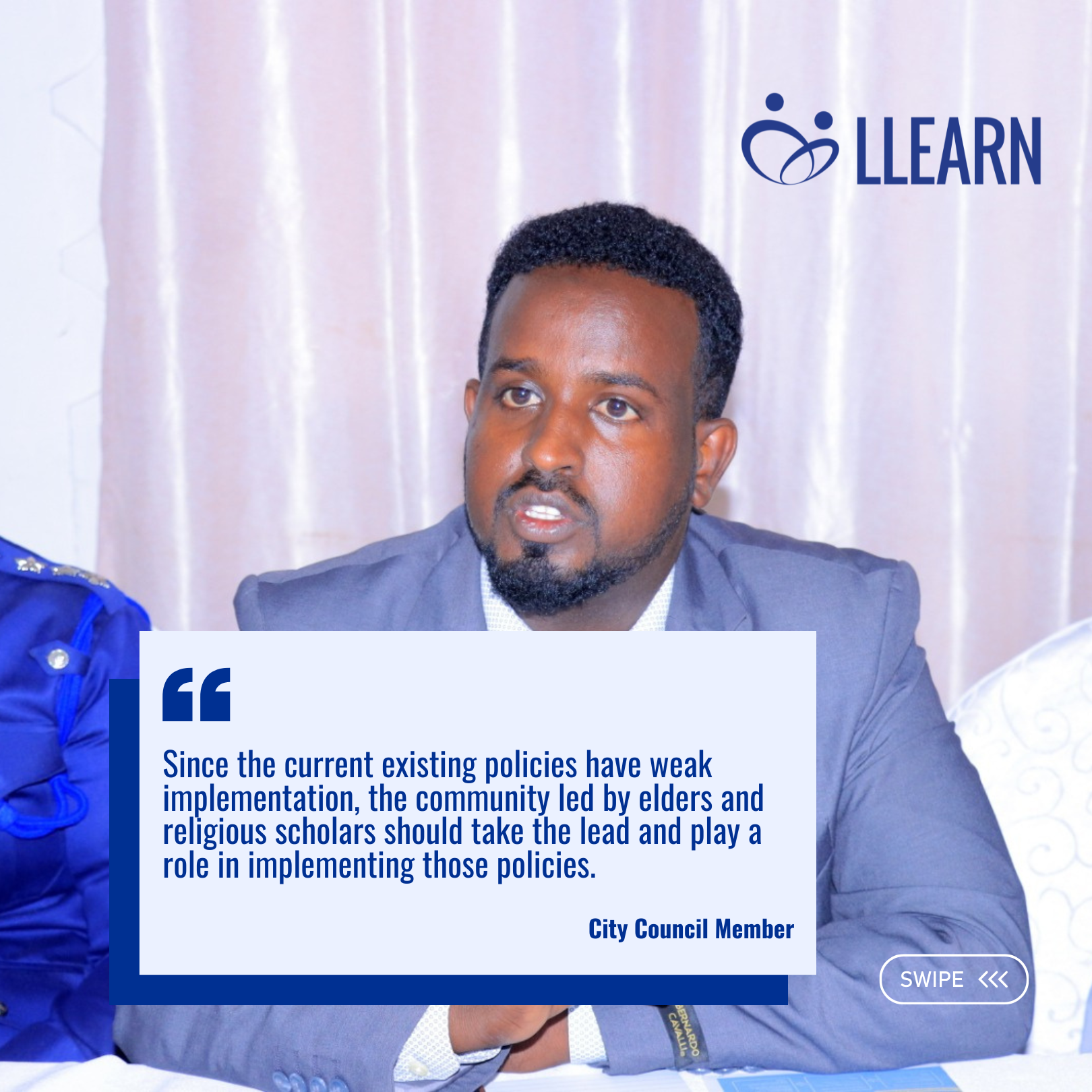
At the same time, participants recognised that reintegration also depends on stronger public systems. Discussions increasingly focused on how local government, communities and humanitarian actors could work together to improve access to health, education and other essential services while strengthening municipal leadership and accountability.
As one participant observed: "A building alone is not useful if there are no teachers and materials."
Pparticipants emphasised the importance of investing in government-led services that can continue functioning long after individual projects have ended.
What emerges from these conversations is not a single picture of reintegration, but several, shaped by people's different experiences. For long-settled internally displaced people and returnees, Bosaso can offer pathways to belonging and stability over time. For women living in informal settlements, life remains shaped by insecure shelter and limited sanitation. For those working in the city's informal economy, employment exists but often lacks security and opportunity for growth. And for families investing in onward migration, Bosaso remains part of a longer journey rather than a final destination.
From priorities to project pathways
By the third Participatory Forum, the conversation had shifted from understanding challenges to deciding how they could be addressed in practice. Building on the ideas developed through the previous forums, participants refined three interconnected project pathways: Business Zakat- and Waqf-Funded Land Access, Small Business and Financial Inclusion, and Services and Governance.
Following discussion and participatory voting, participants selected Services and Governance as the priority pathway for implementation. While secure land remained the city's most significant structural challenge, participants recognised that strengthening health and education services offered the most immediate opportunity to improve everyday life while laying the foundations for longer-term progress on land and livelihoods.
The discussions reinforced several broader lessons for reintegration in Bosaso:
Services and governance provide an immediate entry point for strengthening locally accountable health and education systems while reducing dependence on short-term humanitarian support.
Secure land remains the foundation of durable urban inclusion, underpinning housing, sanitation, access to finance and long-term investment.
Livelihoods require more than employment opportunities, connecting skills development with savings, financial services, market access and locally rooted financing mechanisms.
Reintegration depends on shared local leadership, bringing together municipalities, businesses, religious institutions, financial actors and communities to mobilise resources and implement solutions together.
As one participant concluded: "Local government should not wait for international organisations to solve the problem."
The process itself became one of the strongest outcomes of the forums. Across three participatory forums, displaced communities, local authorities, businesses, religious leaders and civil society moved beyond identifying challenges to jointly designing practical, locally owned solutions. In Bosaso, reintegration became less about waiting for external assistance and more about understanding how local leadership, local finance and stronger urban governance can create the conditions for people not only to arrive, but to stay, settle and thrive. This is what the LLEARN project is all about.
Watch interviews and videos from the forum here.