
Voices from the forum: Koboko’s border-town integration model exists. Sustaining it is the next challenge.
In Koboko, at the borders of Uganda, South Sudan, and the Democratic Republic of Congo, movement is not new. The town hosts an estimated 25,719 refugees and asylum seekers, making up over 25% of the total population. Trade routes, family ties and cross-border livelihoods have connected this municipality for generations. Refugees, returnees, traders, and host communities live alongside each other in a town where mobility is part of how the local economy and society function.
Over time, Koboko has developed a reputation as a place where integration is working. Refugees and host communities share schools, health facilities, markets, and local spaces. Coexistence is not presented as an aspiration, but as something already visible in practice.
This gives Koboko a different starting point from many other places. Can this established model of integration move beyond coexistence to deliver stronger livelihoods, fairer access, and more durable development?
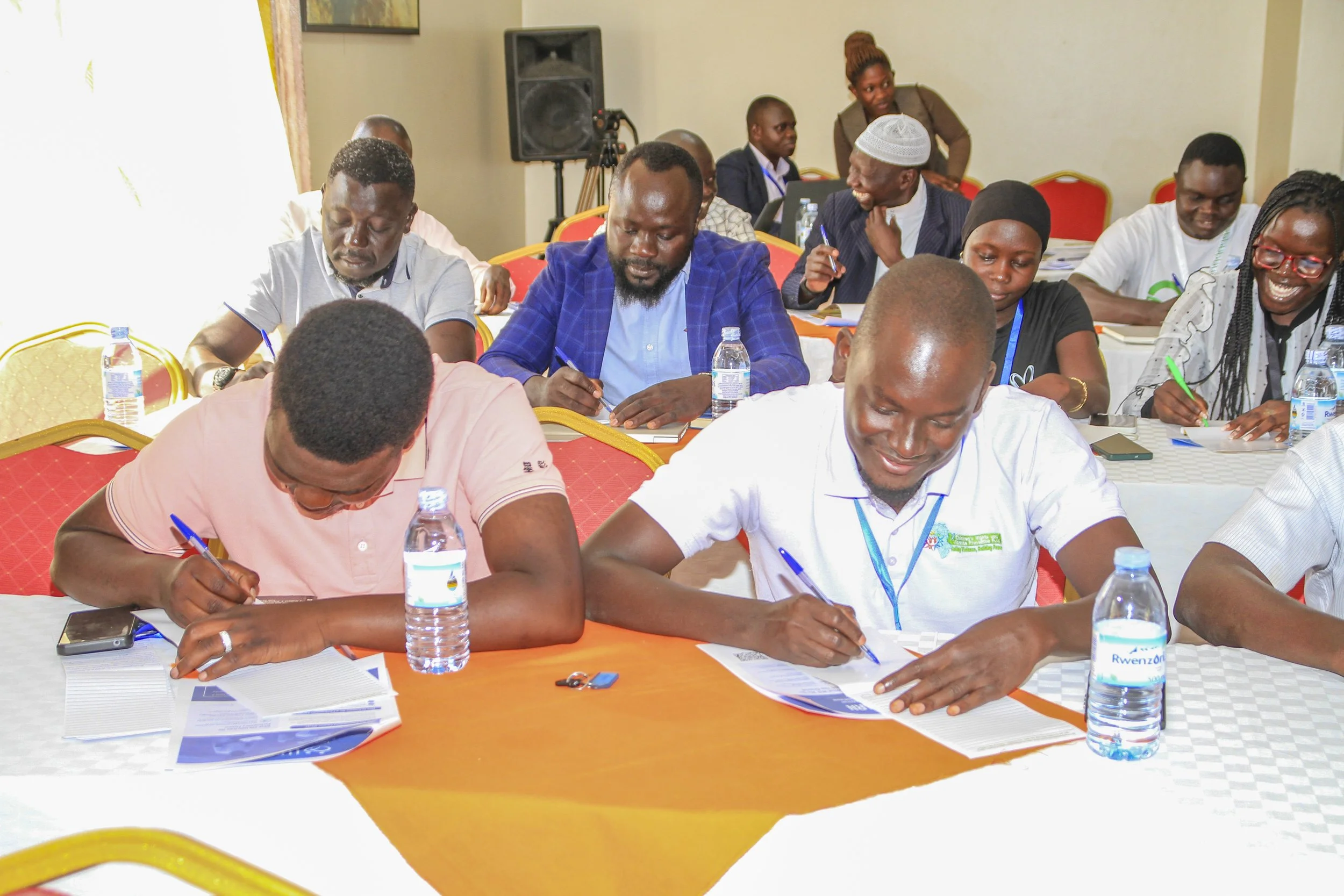
Across three Participatory Forums (PFs), convened by SSURA, under the LLEARN project, municipal leaders, refugee and host community representatives, civil society organisations, refugee-led organisations, technical institutions and government departments worked together to identify what Koboko's next phase of integration should look like.
PF1 explored the municipality's strengths and persistent challenges, PF2 translated these into practical solutions across skilling, enterprise development and shared services, and PF3 refined these into three connected project pathways before selecting the Enterprise Formalisation and Financial Inclusion Model for implementation.
Shared systems carry integration, but investment has not kept pace
In Koboko, refugees, returnees, and host communities use the same schools, health centres, markets, and municipal services. This practical sharing of institutions is one reason integration has taken root in the municipality.
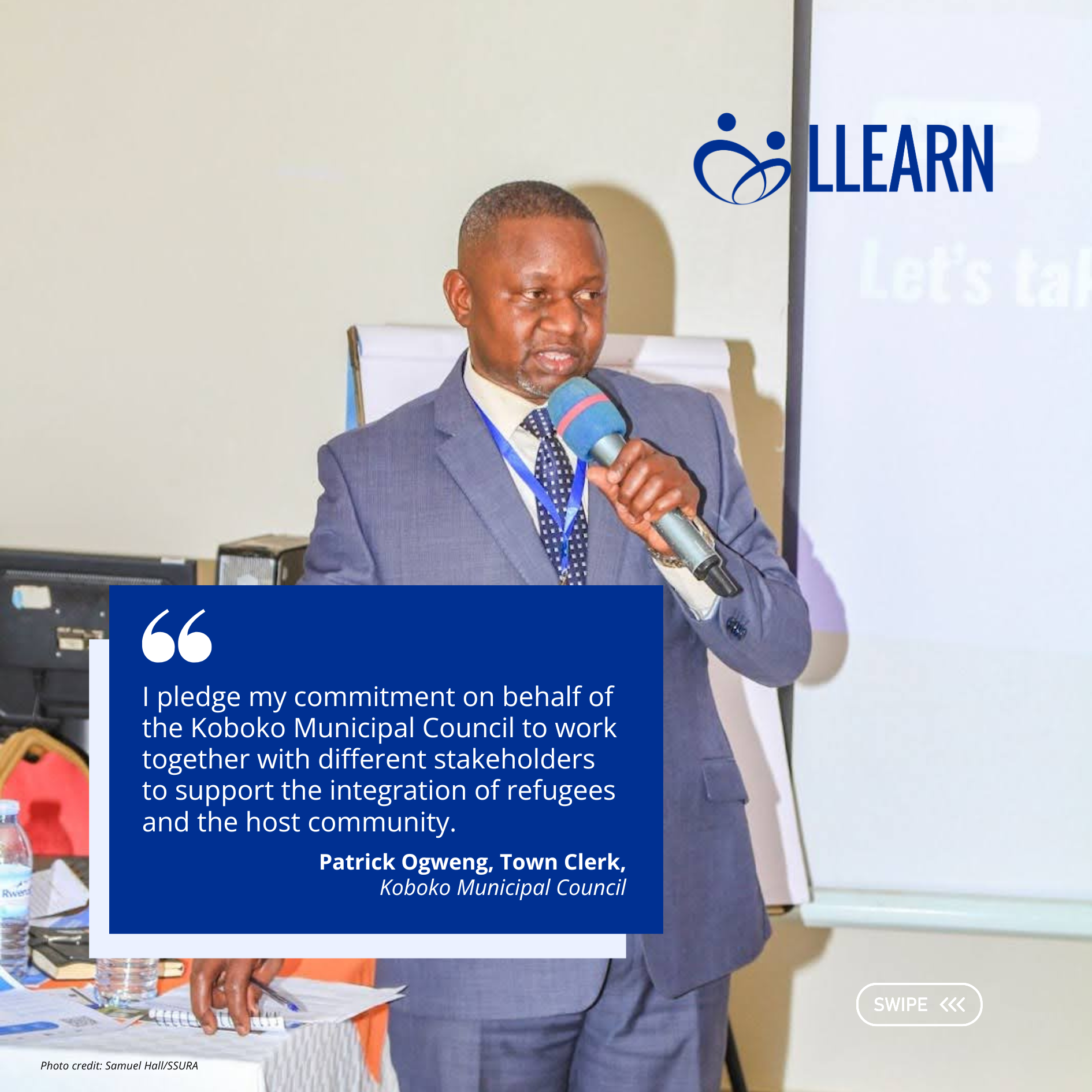
Local government actors also pointed to a long-standing culture of shared responsibility. The Town Clerk, Patrick Ogweng, referred to refugees as “our brothers and sisters who are extremely law abiding,” reflecting an approach that sees refugees as part of the municipality rather than outside it.
At the same time, the forum made clear that shared access does not mean equal or sufficient access. As the population has grown, schools have become overcrowded, health facilities overstretched, and markets more competitive. Systems that support mixed communities are operating with limited resources.
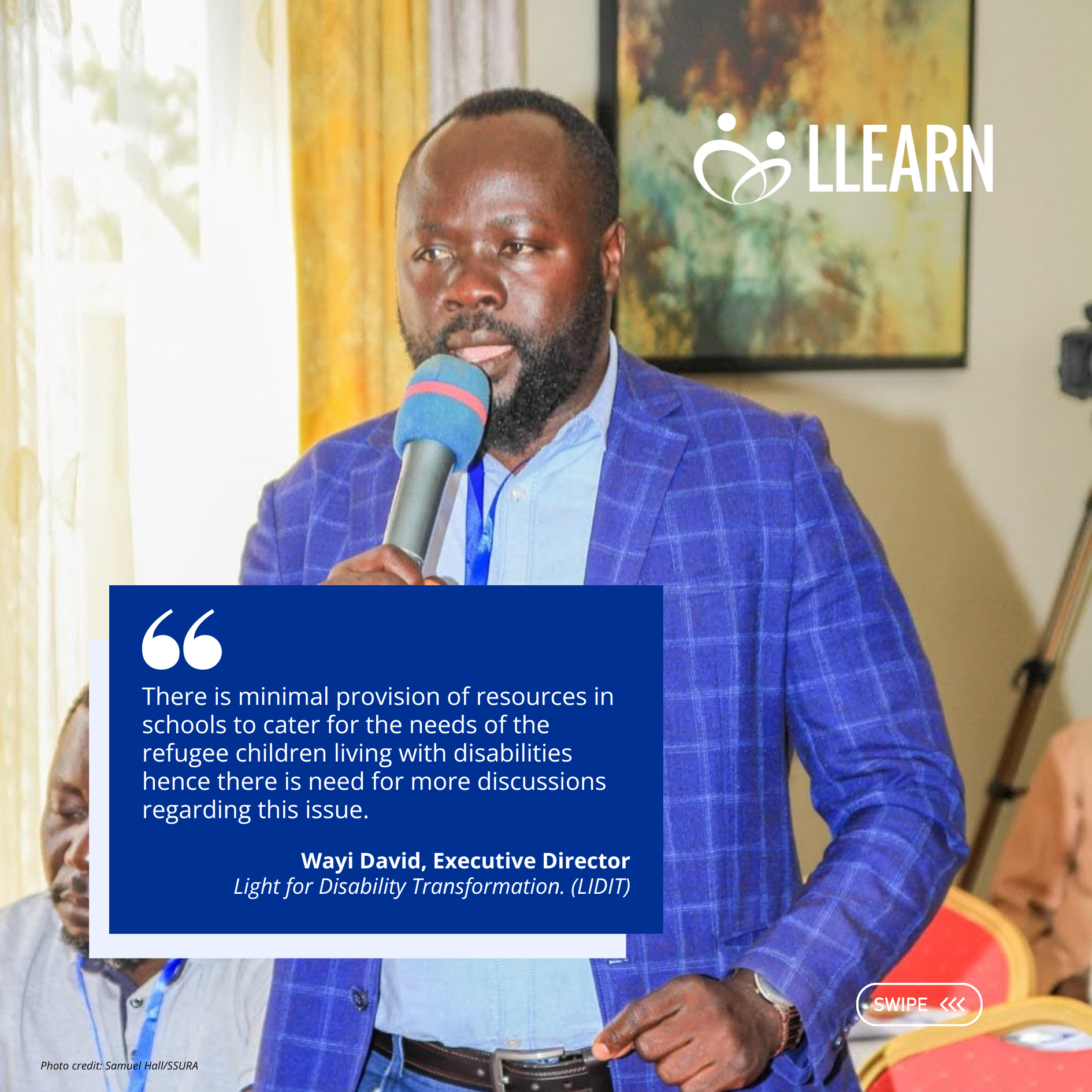
Wayi David, Executive Director of Light for Disability Transformation (LIDIT), highlighted how this pressure can be felt most sharply by those already facing barriers: “There is minimal provision of resources in schools to cater for the needs of refugee children living with disabilities.”
Participants also pointed to gaps that extend beyond core services. One refugee participant explained, “Regarding SIM cards, refugees in urban areas usually access them through friends who are nationals because most of them do not have IDs,” showing how documentation barriers continue to limit full access to everyday systems and services.
At household level, these pressures also carry social costs. Denaya Robert, a refugee youth leader, described families living in single-room spaces and dealing with ongoing stress. Community-based responses, including counselling centres run by SSURA, exist, but demand continues to outpace available support.
PF2 also reframed pressure on schools and health facilities as a shared systems challenge rather than separate refugee and host-community issues. Participants argued that overcrowded classrooms, shortages of teachers and health workers, inadequate infrastructure and rising demand affect everyone living in Koboko. Rather than creating parallel services, they proposed integrated approaches that strengthen existing schools and health facilities while improving coordination between communities, local government and national ministries.
The wider lesson from Koboko is that reintegration can be built through shared institutions, but it cannot rely on goodwill alone. Where investment lags behind need, the systems that make coexistence possible begin to weaken.
People are working, but pathways upward remain limited
When schools, health facilities, markets, and support systems are overstretched, livelihoods are affected too. Economic activity may continue, but households face higher costs, less reliable services, and fewer opportunities to turn day-to-day work into longer-term stability.
While, economic participation was widely recognised across the forum with refugees already working in trade, services, agriculture, and informal sectors; the issue raised repeatedly was ‘progression’.
Batali Kennedy highlighted how access to start-up capital remains limited, as refugees are often excluded from loans due to documentation requirements such as national ID numbers. He also pointed to mismatches in qualifications, language barriers for refugees from French- or Arabic-speaking systems, and business registration processes that many cannot complete.
By the second forum, participants had shifted the conversation beyond access to livelihoods towards the quality of economic opportunity. Rather than calling for more short-term training programmes, they argued for longer, market-driven skills pathways linked to recognised certification, apprenticeships, entrepreneurship, start-up support and job matching. The discussion marked a clear shift from training large numbers of people towards investing in fewer participants through higher-quality programmes that could lead to sustainable employment or viable businesses.
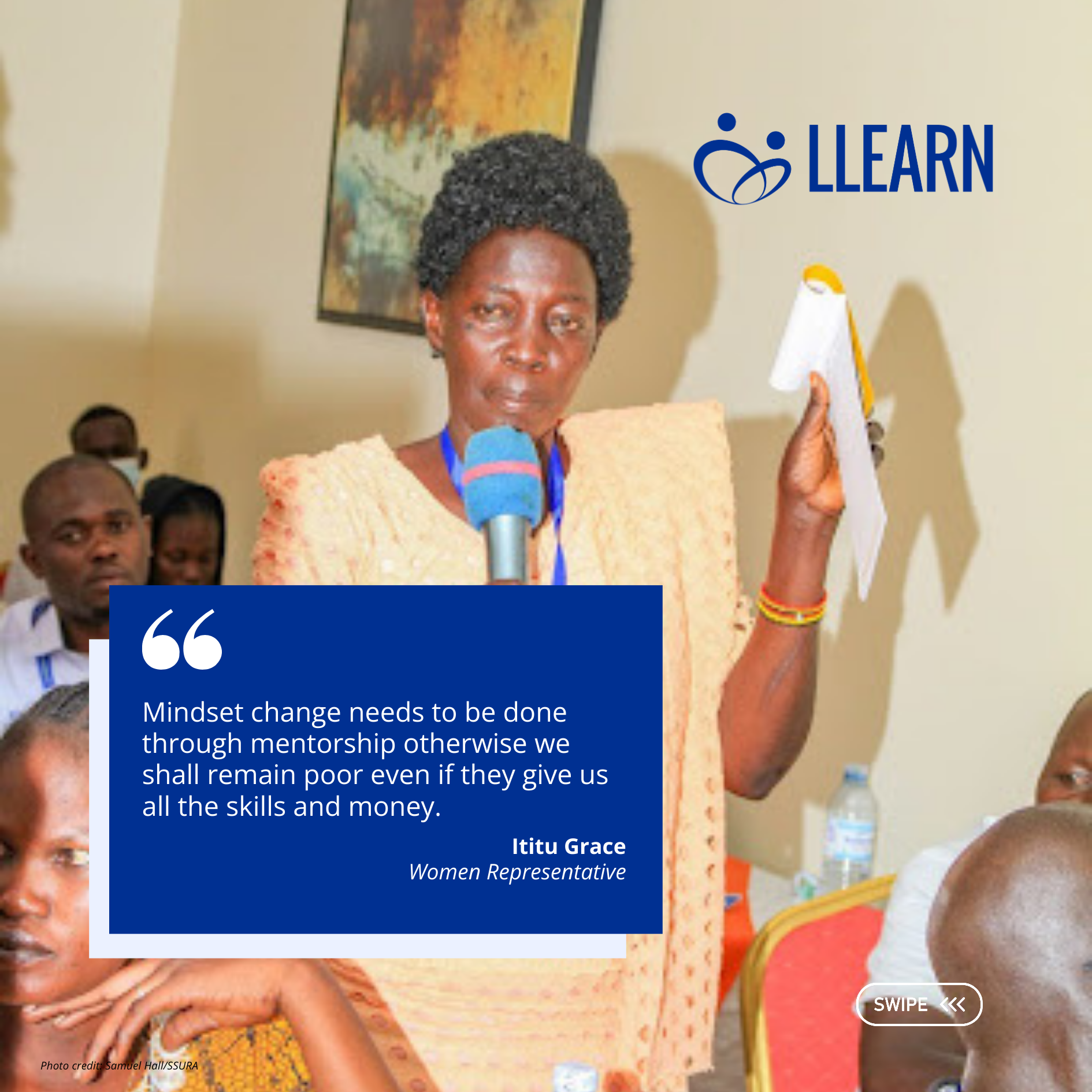
Women leaders and community representatives described a similar problem among youth. Ititu Grace explained, “Most of these youth, both refugees and host community, have been skilled but they are not putting the skills into practice because they do not have the capital for start-ups. Even when they start these businesses, they are always weak and without booster packages, they are bound to fail.”
Thus, while people participate economically, it is often at a lower level than their skills or ambitions would allow. For reintegration to be sustainable, social cohesion must be matched by stronger and fairer economic opportunity.
Strengthening Participation in Policies
The forum also highlighted a more political dimension of reintegration: being present in local structures does not always mean being able to shape outcomes.
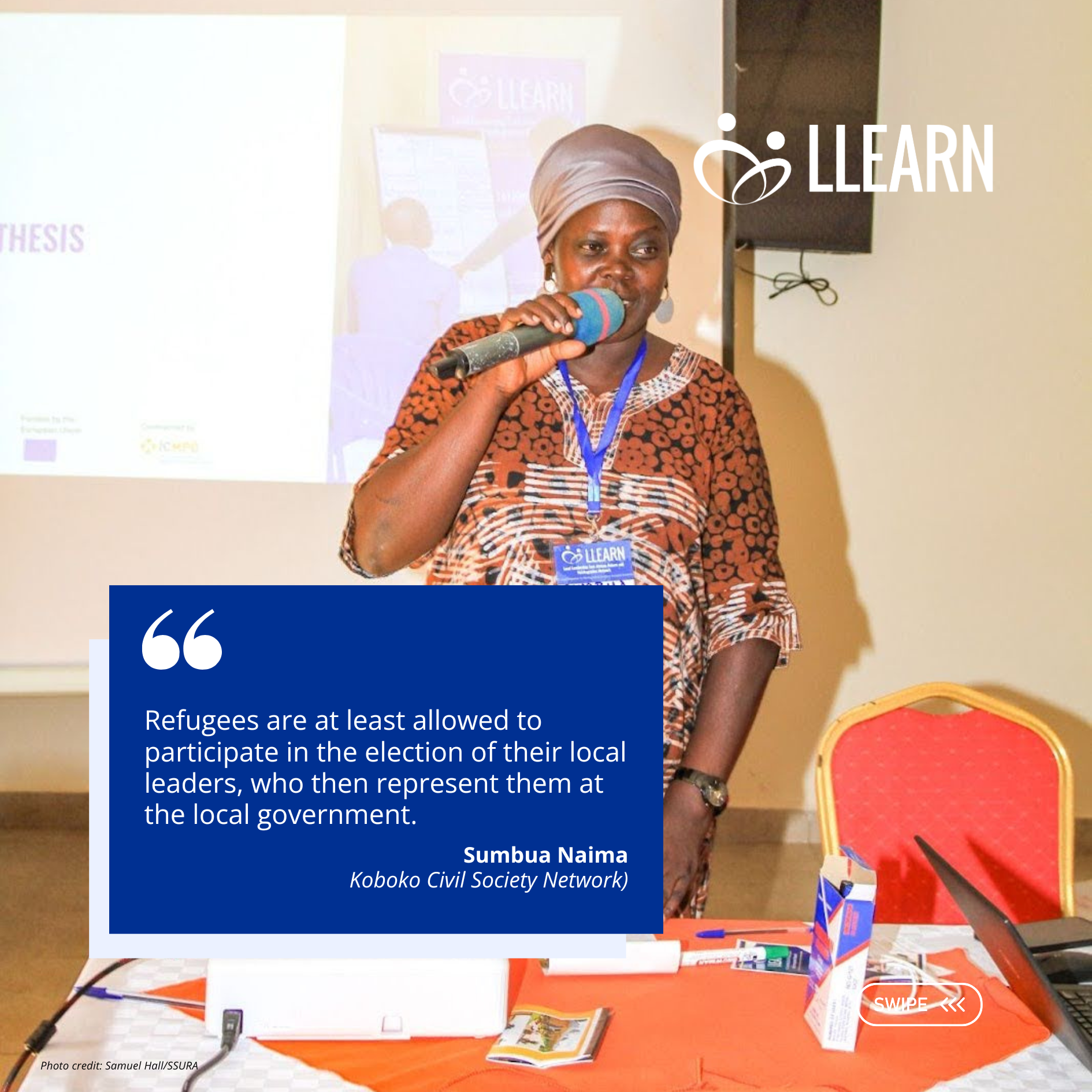
As one representative from the Koboko Civil Society Network noted, “refugees are invited into development forums and planning discussions, but participation is uneven.”
The issue raised was therefore less about presence, and more about influence. Where engagement is irregular, unclear, or disconnected from decisions, participation can remain symbolic rather than transformative.
For a border town like Koboko, this matters because sustainable reintegration also depends on political reintegration, on whether people feel heard, informed, and able to raise concerns through credible local pathways.
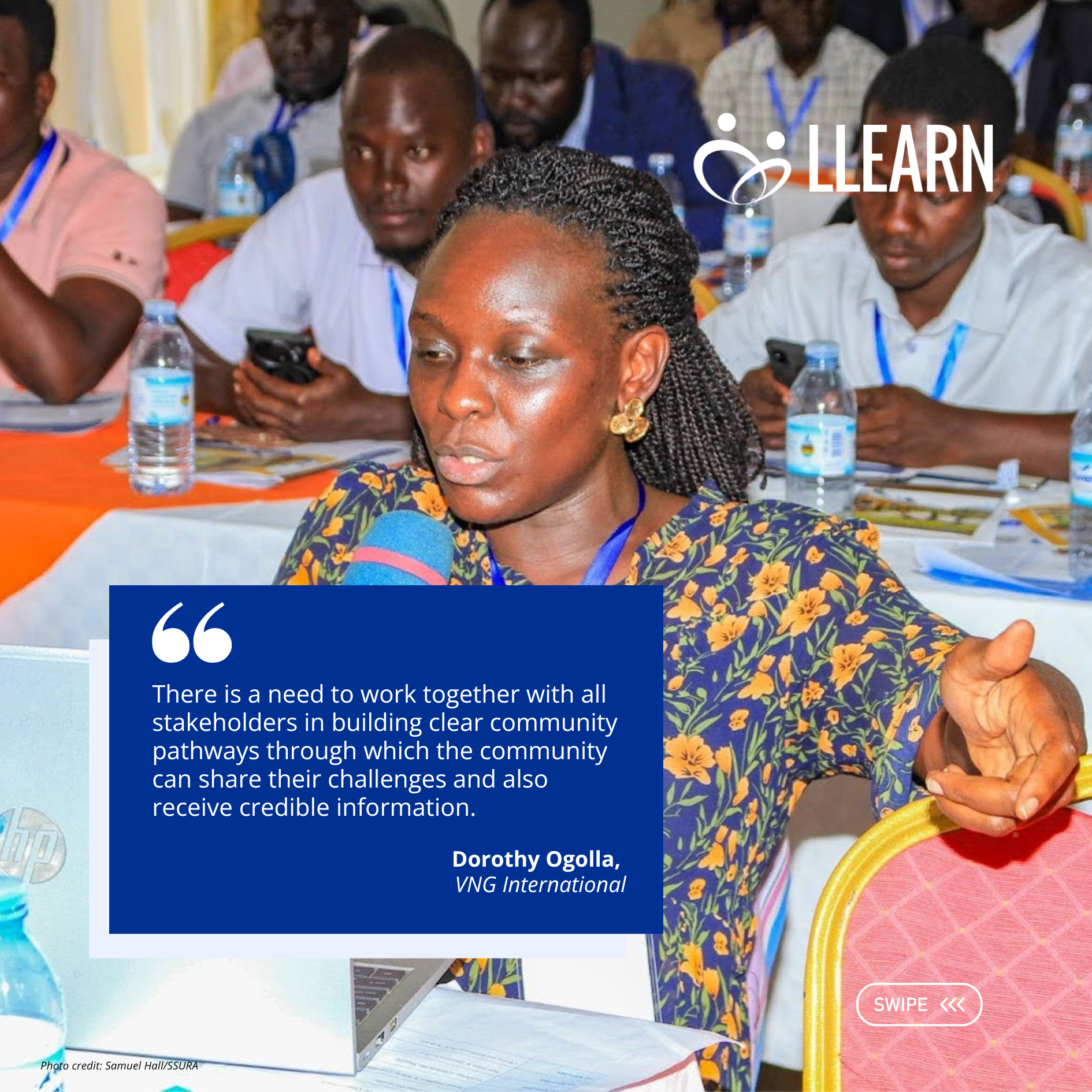
Dorothy Ogolla from VNG International emphasised, “There is a need to work together with all stakeholders in building clear community pathways through which the community can share their challenges and also receive credible information.”
Participants also reflected on the process itself. Building on the continuity between PF1 and PF2, they highlighted how bringing the same stakeholders back together allowed discussions to move beyond identifying problems towards assigning responsibilities, developing practical concepts and building ownership. Livestreaming, local language interpretation and disability inclusion further widened participation beyond those physically present in the room.
Koboko shows that coexistence is possible: From integration to implementation
By the third Participatory Forum, participants had moved beyond discussing challenges to deciding how Koboko's next phase of reintegration should be delivered. Building on the priorities identified during the first two forums, they refined three connected project pathways, recognising that each addressed a different part of the municipality's economic inclusion agenda.
The three concepts included:
The Enterprise Formalisation and Financial Inclusion Model, designed to help refugee, returnee and host-community entrepreneurs strengthen financial literacy, business records, registration, compliance, access to savings and credit, mentorship and market linkages.
Quality Integrated Skilling for Employment and Economic Inclusion, focusing on longer, competency-based, market-driven training linked to recognised certification, apprenticeships and entrepreneurship rather than short-term skills courses.
An Integrated Education, Health and Livelihood Service Hub, bringing together education, health and livelihood support around existing schools and health centres, with a particular focus on vulnerable households and persons with disabilities.
Following the forum, the consortium reviewed the three concepts against implementation feasibility, institutional ownership, available resources and the potential to produce visible results within LLEARN's final phase. The Enterprise Formalisation and Financial Inclusion Model emerged as the priority intervention because it builds directly on businesses that already exist while addressing one of the barriers raised consistently throughout the forums: the difficulty of moving from informal survival to recognised, finance-ready and market-linked enterprises.
Ultimately, Koboko demonstrates that peaceful coexistence is only the beginning of reintegration. The next challenge is ensuring that shared systems create equitable opportunities for refugees, returnees and host communities alike—so that businesses can grow, skills can translate into livelihoods and integration can deliver lasting economic inclusion.
Watch interviews and videos from the forum here.