
Voices from the Forums: Building belonging in Aweil means strengthening shared systems
Aweil is a city built on movement. It is a place of arrival for refugees, returnees, internally displaced people (IDPs), seasonal pastoralists and vulnerable host communities, all seeking safety and the opportunity to rebuild their lives. Unlike many displacement contexts, Aweil remains relatively peaceful, with strong community networks and local leadership helping to foster coexistence between different groups.
Yet peace alone is not enough. As more people settle in the city, land systems, water infrastructure, health services, education and municipal planning have struggled to keep pace. Reintegration in Aweil is therefore less about resolving tensions between communities than about ensuring the systems that support them are strong enough to accommodate a growing population.
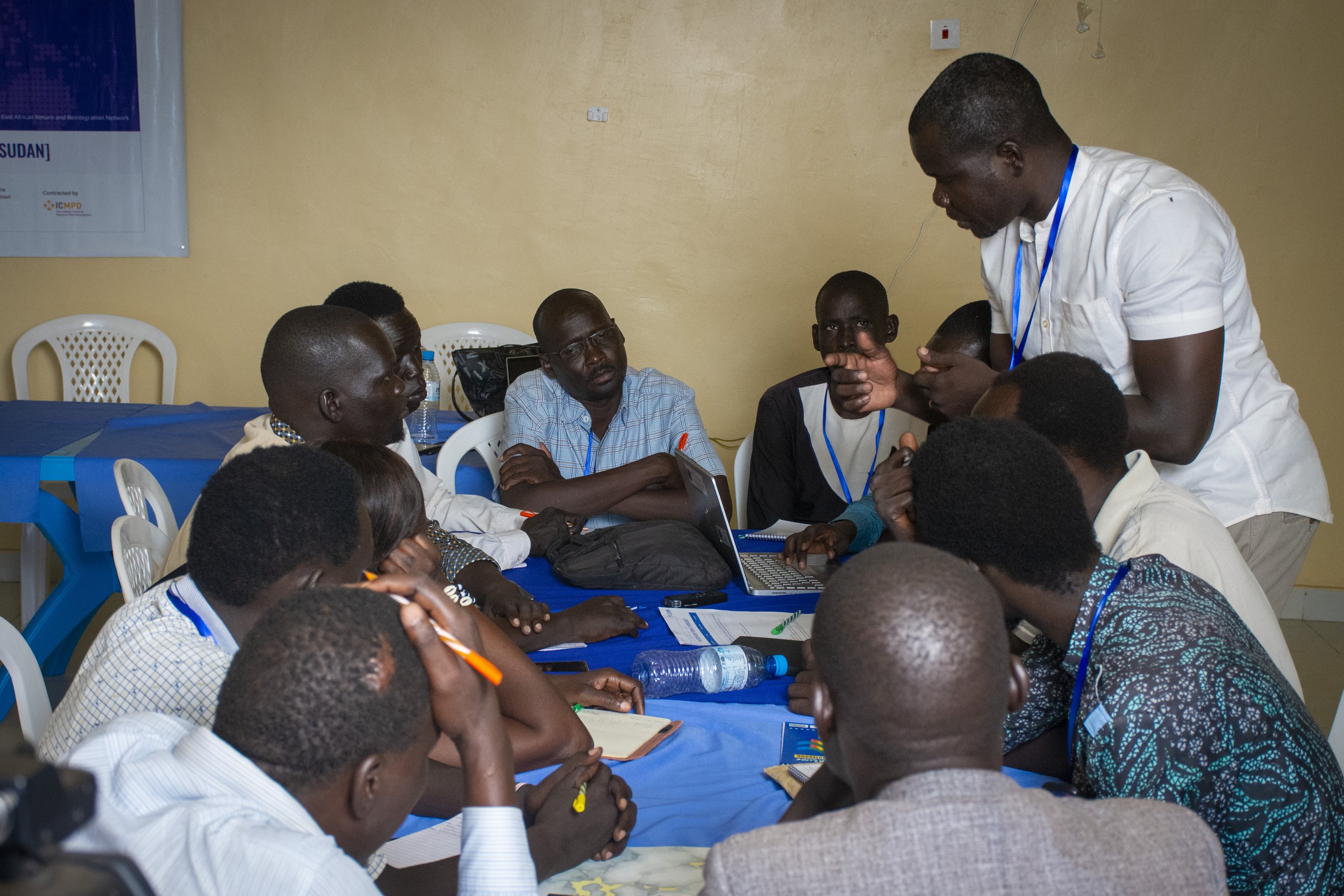
Over the course of three Participatory Forums (PFs) under the LLEARN project, government representatives, humanitarian organisations, traditional leaders, women's and youth groups, civil society organisations, refugees, returnees, internally displaced people and host communities came together to shape a shared vision for reintegration in Aweil. PF1 identified the city's key structural challenges, PF2 developed practical solutions to address them, and PF3 translated those ideas into concrete project pathways for implementation.
Land is the foundation of belonging
Many returnees and refugees have been allocated land but remain without formal documentation, leaving them uncertain about whether they can develop it, farm it or pass it on to future generations. This uncertainty discourages long-term investment while increasing the risk of disputes and exclusion.
"Another point, we need the government and humanitarian actors to give returnees, IDPs and refugees a nationality certificate. This certificate will enable them to sell land without obstacles, it will also enable them to look for job opportunities." — PF2 participant.
Participants reframed land documentation as the anchor of structural inclusion rather than an administrative process. They proposed stronger coordination between the Governor's Office, the Ministry of Lands and Housing, the Relief and Rehabilitation Commission (RRC), the Commission for Refugee Affairs (CRA), chiefs and community representatives to improve land allocation, strengthen documentation pathways and resolve disputes before they escalate. By PF3, these discussions had evolved into a practical concept focused on land documentation and settlement pathways.
Water as the foundation of everyday life
If land provides stability, water determines whether communities can thrive.
Long queues at water points, non-functional hand pumps, poor sanitation and limited hygiene facilities increase health risks while placing additional pressure on already stretched communities.
"People are facing the issue of toilets; they do not have toilets for the returnees, and most community IDPs do not have toilets. Secondly, they do not have water." — PF2 participant.
Participants consistently described water not simply as a basic service, but as the foundation of health, livelihoods and peaceful coexistence. They also highlighted an often-overlooked strength: across Aweil, water management committees are predominantly led by women, typically comprising five women and two men. These committees oversee the day-to-day management of water points, organise maintenance, collect user contributions and help resolve disputes over access.
Rather than viewing WASH as a standalone humanitarian intervention, they described it as essential infrastructure for reintegration, improving health, reducing tensions and supporting livelihoods. By the third forum, Water Yard Upgrades emerged as the priority project pathway.
Recovery begins with local enterprise
Participants described an economy constrained by inflation, high taxation, delayed rains, climate change, limited access to finance and heavy dependence on imported goods. These pressures affect everyone in Aweil, but displaced communities face additional barriers because they often lack secure land, documentation and access to credit.
"High tax is one of the economic challenges that we have. When goods are imported and then high taxes are imposed, then when it comes to the market to the last destination, you find that the price is very high and many people will not afford it in the market. And this makes life of the ordinary citizen become very, very, very difficult," shared one participant.
Rather than proposing training programmes alone, the forums focused on strengthening systems that already exist within communities. Village Savings and Loan Associations (VSLAs), women's groups, farmer cooperatives and local businesses were identified as practical entry points for expanding access to finance, supporting entrepreneurship and increasing local food production.
"You see, women are trying to do business. But because of lack of enough support they cannot."
"And then when they produce, they sell their produce and then some money is gathered and then it is remitted in the VSLA fund box. It will help them."
Participants described VSLAs as trusted community institutions where people pool resources, build financial resilience and strengthen social support networks. Expanding these groups to include returnees and internally displaced people was seen as a practical way to foster economic inclusion while rebuilding relationships between communities. Participants also emphasised that investing in women-led enterprises generates benefits beyond individual households, increasing food security, creating local employment and strengthening the wider local economy.
These discussions ultimately informed one of the three project concepts presented at PF3: Women-led VSLAs and Small Business Recovery. Rather than creating parallel programmes, the proposal builds on community-led systems that already exist, positioning local enterprise as both a pathway to economic recovery and a foundation for durable reintegration.
Stronger systems, not more policies
Unlike many contexts where policy gaps dominate discussions, participants repeatedly emphasised that Aweil already has relevant legal and policy frameworks. The greater challenge lies in implementation.
Across the forums, participants described weak coordination between institutions, limited technical capacity, fragmented data systems and inconsistent implementation of existing frameworks. This also meant recognising the important role already played by chiefs, local authorities, community organisations and humanitarian actors. Rather than creating parallel structures, participants called for stronger coordination between these existing actors, alongside clearer responsibilities and more consistent follow-up.
“The steps to the next forum, we need to inform the relevant and concerned ministries, which have a link with land allocation to bring up the issue of the coordination forum that we should establish.” — PF participant
From priorities to project pathways
By the third Participatory Forum, the conversation had shifted from identifying challenges to deciding how they could be addressed in practice. The project concepts developed over the previous forums were refined into three community-led pathways: Land Documentation and Settlement Pathways, Women-led VSLAs and Small Business Recovery, and Water Yard Upgrades.
Participants assessed each proposal against criteria including relevance, feasibility, inclusivity and local ownership before selecting Water Yard Upgrades as the priority intervention. The concept was then further refined through plenary discussion, strengthening both the proposal itself and the collective ownership behind it.
The process reinforced several broader lessons for reintegration in Aweil:
Water infrastructure provides an immediate and practical entry point for improving health, livelihoods and community wellbeing.Participants also recognised that safe water alone is insufficient without improved sanitation and hygiene. The proposed pathway therefore combines upgraded water infrastructure with community-led sanitation, hygiene promotion and local maintenance systems.
Land documentation and settlement pathways remain fundamental to long-term inclusion, enabling people to invest in housing, agriculture and local economies with greater security.
Women's economic recovery, through Village Savings and Loan Associations and small businesses, represents a locally driven pathway towards resilience and self-reliance.The PF3 discussions reinforced that these leadership roles should be strengthened further as part of the city's reintegration pathway.
Watch interviews and videos from the forum here.